Table of contents
- Conservation and Ecological Importance
- Giant tortoises as ecosystem engineers
- Why Floreana, why now? - Floreana’s Rewilding Story: Seeds, Shorelines, and Small Ships
- From hatchlings to habitat recovery
- The human dimension on an inhabited island
- What luxury expedition cruises make possible on Floreana - Experiencing Floreana Through Luxury Expedition Cruises
- Explore the Wild Western Galapagos on an 8-Day Expedition
- FAQ
- Are giant tortoises native to Floreana Island?
- How many tortoises were released on Floreana in 2026?
- Why are giant tortoises called “ecosystem engineers”?
- Can you visit Floreana on a Galapagos cruise? - Conclusion
On Floreana Island—wind-swept, volcanic, and famously layered with human lore—the slowest animal on Earth has become the clearest symbol of forward motion. In late February 2026, conservation teams released 158 juvenile giant tortoises onto Floreana, marking the first time in roughly 150–180 years that tortoises have walked this island again.
In the Galapagos, “milestones” are rarely just headlines. They’re ecological turning points measured in decades: the return of a keystone species, the rebalancing of an invaded landscape, the re-learning of coexistence on an inhabited island. The Floreana release is the opening of a long restoration arc—one that aims to rebuild not only a population, but a role that disappeared when whalers and settlers removed tortoises by the thousands in the 19th century.
For travelers who care about wild places—and prefer to encounter them with context and care—this is also a rare moment: an island you can visit while its “rewilding” story is actively unfolding.
Conservation and Ecological Importance
Giant tortoises as ecosystem engineers
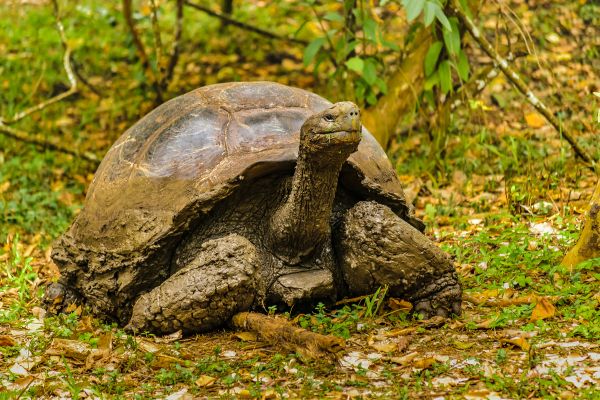
Giant tortoises aren’t just charismatic megafauna; they are ecological infrastructure. As large herbivores, they shape plant communities through grazing, open pathways through dense vegetation, and disperse seeds across long distances—often depositing them in natural fertilizer after digestion. Those behaviors help native plants reestablish, which in turn supports insects, birds, and reptiles that depend on specific habitats.
On islands, this “engineering” effect can be outsized. When tortoises vanish, vegetation can shift toward thickets and invasive dominance, altering light, soil moisture, and regeneration patterns. Bringing tortoises back is not only about reviving a lineage; it’s about restoring ecological processes—seed dispersal, trampling, grazing pressure—that keep an island’s mosaic of habitats functioning.
Why Floreana, why now?
Floreana’s native tortoise (often referenced as the Floreana giant tortoise, Chelonoidis niger niger) was driven locally extinct by the mid-1800s. What makes the 2026 release especially compelling is the science behind it: researchers identified tortoises with Floreana ancestry on Wolf Volcano (Isabela) in 2008, then used careful genetic selection and captive breeding to produce juveniles with substantial Floreana lineage—reported in coverage as ranging roughly from 40% to 80% in some individuals.
This isn’t “de-extinction” in the sci-fi sense; it’s restoration biology under real constraints: use the best available genetic threads, maximize diversity, and reintroduce animals only after invasive-species control and habitat work make survival plausible.
The release is also designed as the first stage, not the finish line. Reporting around the project notes a broader plan that envisions hundreds more tortoises introduced over time.
Floreana’s Rewilding Story: Seeds, Shorelines, and Small Ships
From hatchlings to habitat recovery
The juveniles released in February 2026 were described as roughly 8 to 13 years old—large enough to better withstand certain threats in the environment. Their timing also matters: releases coordinated with seasonal rains can improve forage availability and reduce immediate stress, giving the animals a better first chapter in the wild.
As these tortoises grow, their impact becomes cumulative. Seed dispersal isn’t a single event; it’s a slow re-stitching of plant communities across elevations—from arid lowlands to greener interior zones. Trampling creates micro-corridors where seedlings can establish. Grazing can keep grasslands open, which benefits other native species adapted to those conditions.
The human dimension on an inhabited island
Floreana isn’t an empty wilderness. It’s home to a small community (often cited around ~160–200 residents in recent coverage), and restoration has to work socially as well as ecologically. Invasive-species pressure—rats, cats, pigs, and aggressive plants—has historically harmed wildlife and agriculture alike. Recent reporting and partner updates describe multi-organization efforts that pair eradication and biosecurity with community participation and monitoring.
That matters for travelers, too. In the Galapagos, the most meaningful wildlife experiences are often the ones framed by restraint: staying on marked trails, keeping respectful distance, and understanding that “access” is a privilege granted by an ecosystem under constant pressure.
What luxury expedition cruises make possible on Floreana
Luxury in the Galapagos is best measured in access, expertise, and low impact—not in glitter. Small-ship expedition cruising makes it feasible to visit remote landing sites with minimal infrastructure, often via pangas, and to spend your days learning from expert naturalist guides who can translate a landscape: why a brackish lagoon draws flamingos, how a lava formation hints at geologic time, why a saddleback shell can signal evolutionary history.
On Floreana, that approach shines because the island is both biological and historical: a place of pink-sand beaches and seabird cliffs, but also Post Office Bay’s centuries-old mail tradition and highland sites like Asilo de la Paz that echo the island’s human narratives. Visiting with naturalists turns “seeing” into “understanding”—and that’s exactly what a restoration story deserves.
Experiencing Floreana Through Luxury Expedition Cruises
A well-run luxury expedition is built around disciplined logistics: small guest counts, timed landings, and interpretation that elevates every encounter without intensifying pressure on the place. On Floreana, that often means a thoughtful sequence—snorkeling a volcanic crown one day, walking a flamingo lagoon the next, then stepping into the highlands where water, agriculture, and habitat restoration intersect.
Just as importantly, expedition cruising can help travelers connect the dots between conservation outcomes and conservation funding. In the Galapagos, where long-term monitoring, invasive control, and breeding programs are expensive and ongoing, visitor presence is not inherently harmful—but unmanaged visitation is. The difference is governance, operator standards, and traveler behavior.
Explore the Wild Western Galapagos on an 8-Day Expedition
The 8-day Western Islands itinerary aboard the Galapagos Passion Yacht explores some of the most biodiverse and volcanic landscapes in the archipelago. From the giant tortoise habitats of Santa Cruz to the pristine ecosystems of Fernandina and Isabela, this journey combines wildlife encounters, snorkeling, and guided hikes across dramatic lava fields.
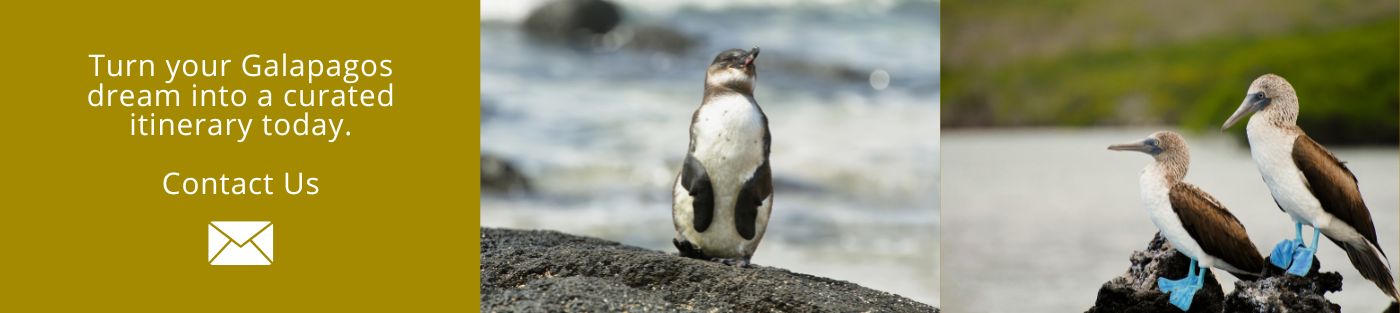
Travelers can explore historic landing sites, snorkel in nutrient-rich waters, and observe endemic species such as marine iguanas, Galápagos penguins, and flightless cormorants. You can explore the full route and day-by-day itinerary here.
Highlights of this Western Galápagos itinerary include:
-
Seeing giant tortoises in the Santa Cruz Highlands and visiting the Charles Darwin Research Station
-
Snorkeling at Devil’s Crown, one of the most famous marine sites in the Galápagos
-
Exploring the volcanic landscapes of Isabela Island
-
Visiting Fernandina Island, one of the most pristine ecosystems on Earth
-
Walking across dramatic lava flows at Sullivan Bay on Santiago Island
-
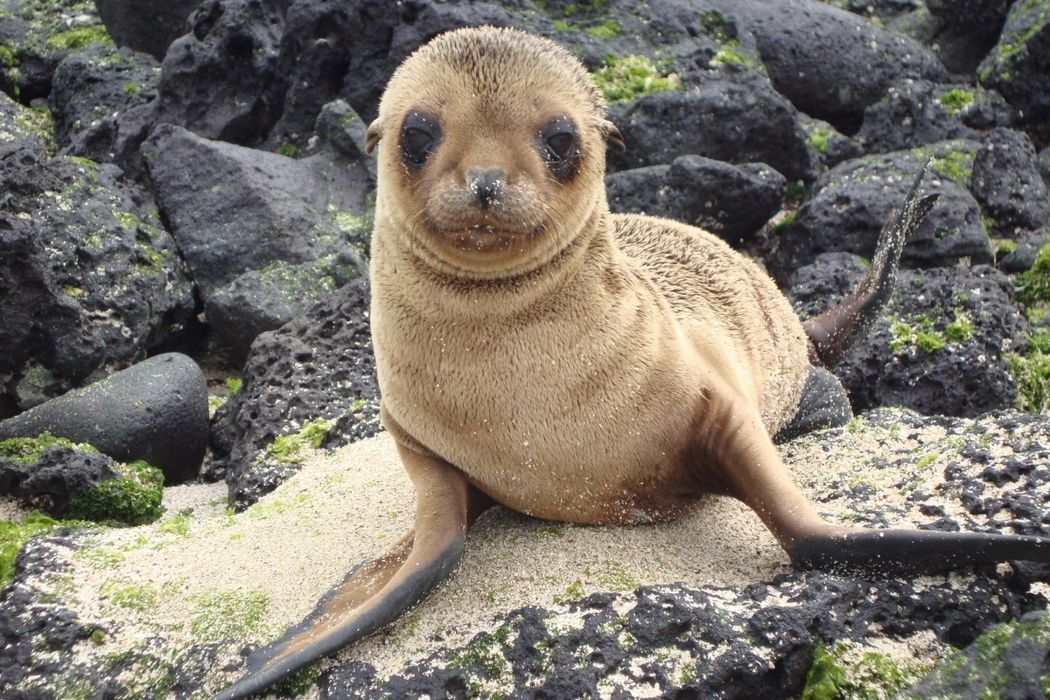
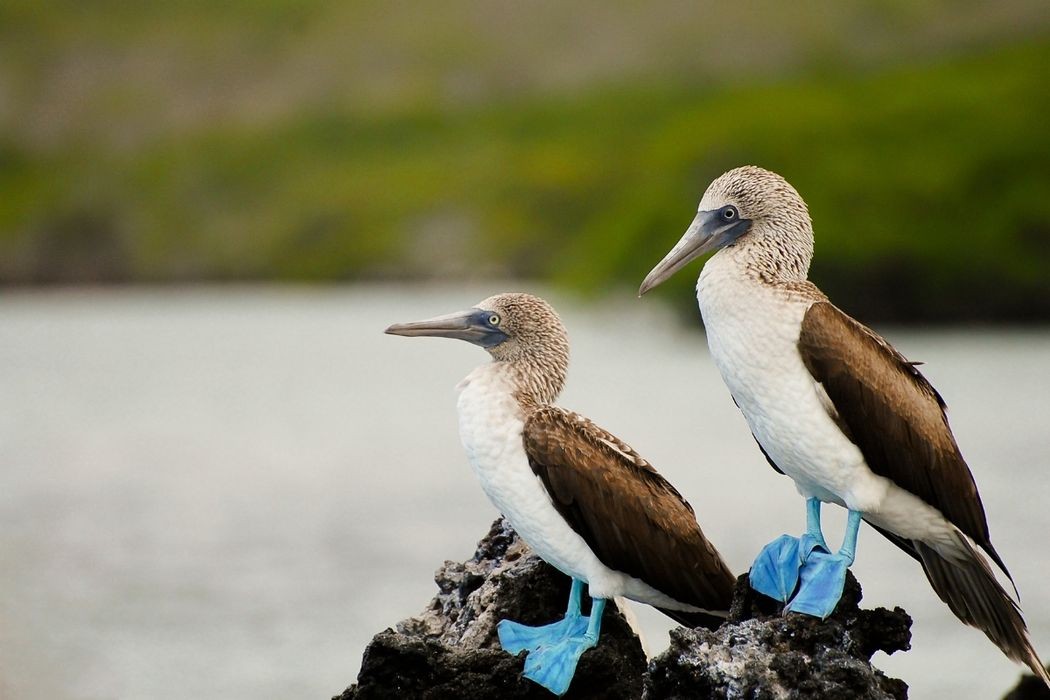
Observing sea lions, blue-footed boobies, and frigatebirds at North Seymour and Mosquera
Why Western Galápagos Itineraries Are Special
The western region of the Galapagos is known for strong ocean currents that bring nutrient-rich waters, creating ideal conditions for marine wildlife. These remote islands offer some of the best opportunities in the archipelago to see rare species and active volcanic landscapes in a relatively untouched environment.
FAQ
Are giant tortoises native to Floreana Island?
Yes. Floreana historically supported a large population of giant tortoises, but they were driven locally extinct by the mid-1800s due to exploitation and introduced species.
How many tortoises were released on Floreana in 2026?
Conservation teams released 158 juvenile giant tortoises in February 2026 as part of the Floreana Ecological Restoration Project.
Why are giant tortoises called “ecosystem engineers”?
Because their grazing, trampling, and seed dispersal reshape habitats—helping native plants regenerate and supporting broader biodiversity recovery.
Can you visit Floreana on a Galapagos cruise?
Yes. Select itineraries include Floreana landings and snorkeling sites, often guided by naturalists with strict park rules designed to protect wildlife and restoration efforts.
Conclusion
The return of giant tortoises to Floreana is the kind of conservation story the Galapagos rarely offers in real time: not a rescue of a single animal, but the restoration of an ecological job description—seed carrier, grazer, path-maker—that an island has been missing for generations. It’s hope with a measurable timeline, written in footprints that move a few inches at a time. And for those who explore the archipelago by responsible, small-ship expedition cruising, the experience can be more than spectacular: it can be participatory in spirit—bearing witness to a fragile place, learning its rules, and leaving it with its future intact.